
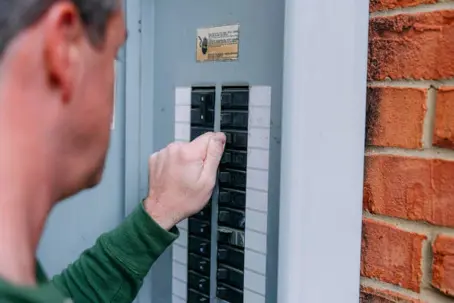
The moment your furnace or heat pump starts on a cold Connecticut morning and the lights dim for a second, your home is telling you something. Most people blame the utility or a “quirk” of an older house, but that quick flicker is often a warning sign that the electrical panel is struggling to handle winter demand.
We have been helping Fairfield and New Haven County homeowners stay comfortable since 1979, and we see the same pattern every fall. As the heating system, humidifier, and cold-weather plug-ins come online, the circuit breaker panel becomes the quiet workhorse behind your comfort. When it is not ready for winter, you feel it through nuisance breaker trips, unreliable heat, and, in the worst cases, safety risks.
Making sure your electrical panel is ready for winter is not about becoming an electrician. It is about understanding what you can safely look for, what truly needs a licensed technician, and how all of this ties into the heating system that keeps your family warm.
Why Winter Is the Hardest Season for Your Electrical Panel
Your panel does its most demanding work when outdoor temperatures drop. Winter piles multiple heavy electrical loads on the system at the same time, often on older panels that were never designed for today’s equipment.
Even if your main heat source is gas or oil, your heating system relies on several electrical components. The blower motor that moves warm air, the electronic igniter, the control board, and the thermostat all draw power whenever the furnace runs. During a cold snap, those cycles get longer and more frequent, so that load becomes almost constant.
If you heat with a heat pump, the demand can be even higher. A heat pump compressor uses a large burst of electricity when it starts, called startup current. That spike, combined with the blower and any backup electric heat strips, can put significant stress on a panel that is already serving a full household.
On top of that, many Connecticut homes add seasonal loads in winter. Portable space heaters, electric blankets, plug-in humidifiers, and decorative lighting all share circuits with your existing outlets and lights. When several of these run at once, the panel must distribute more current than it typically does in summer, when the main additional load is central air conditioning on a few hot days.
Our local grid adds another wrinkle. In Fairfield and New Haven Counties, many homeowners are served by United Illuminating, which supplies power to shoreline communities including Milford. When a Nor’easter or ice storm hits, the grid can see repeated interruptions and voltage fluctuations. Your panel has to keep everything inside the home stable while power blinks, surges, and restores, sometimes for days at a time. That is why a sound panel with solid grounding and secure connections is a key part of winter readiness.
Warning Signs Your Panel Is Struggling
Panels rarely fail without warning. Most give clear clues once winter heating season starts, especially in homes built before 1990.
If the lights dim or flicker every time the furnace or heat pump starts, the panel is straining to share power across competing circuits. One occasional flicker during a major storm may not be a concern, but a pattern you can predict, like “every time the heat turns on, the lights blink,” is worth paying attention to.
Repeated breaker trips are another red flag. A single trip after plugging in a new space heater might mean that one circuit is overloaded. Breakers that trip several times a week during cold weather, especially when the heating system, oven, or dryer runs, can signal that the overall system is running at or beyond its intended capacity.
Some signs call for immediate professional help, regardless of weather:
- Burning smell near the panel. A hot, metallic, or plastic odor suggests overheating insulation or loose connections.
- Heat from the panel cover. A panel should be close to room temperature. Consistent warmth on the metal door can indicate internal issues.
- Buzzing or crackling sounds. Electrical arcing or loose breakers often make noise when circuits are loaded.
Around the house, warm outlets or faceplates, frequent use of power strips and extension cords to run space heaters, or a panel that still uses screw-in fuses rather than modern breakers all point to a system that was not designed for today’s winter load. These are problems you should not ignore through another heating season.
What Homeowners Can Check Before Calling a Pro
There are several things you can safely look at yourself before you call for help. None of these steps involve removing the panel cover or touching wiring. If something feels unsafe or confusing at any point, it is fine to stop and call us.
First, look at your panel’s front door with the power on as normal. Open the door and find the label from the manufacturer on the inside. This usually lists the brand, model, and amperage rating, such as 100 amps or 200 amps. Many older Connecticut homes still have 60- or 100-amp service, which was common decades ago but is often undersized for modern heating systems, kitchen appliances, and electronics. If your panel is 100 amps or less, or if the label looks old, faded, or references dates more than 25 to 40 years ago, it is worth having a licensed technician evaluate it.
Next, take a slow look at the exterior of the panel and the surrounding wall. You are checking for rust stains, discoloration, bubbles in the paint, or any scorch marks near the breakers. If your panel is in a basement, garage, or on an exterior-facing wall, also watch for moisture, condensation, or water marks. Winter in Connecticut means damp basements and big temperature swings that can pull moisture onto cold metal surfaces, which is not a good combination with electricity.
You can also test your ground fault circuit interrupter, or GFCI, outlets. These are the outlets with “test” and “reset” buttons, typically found in kitchens, bathrooms, garages, and basements. Press the test button to trip the outlet, then press reset. If the outlet will not reset or trips again immediately with nothing plugged in, there may be a deeper wiring or load issue, not just a bad outlet.
While you are moving through the house, note any patterns. Which breakers trip most often? Do certain rooms lose power when the heating system starts or when a space heater is running? Having this information ready helps us quickly track down whether the concern is with the panel, the individual circuit, or a specific appliance.
When a Panel Upgrade Makes Sense
Once you have a sense of your panel’s age and behavior, the next question is whether upgrades are worth considering before winter deepens. In many older homes, the answer is yes, especially when you rely on central heating or are planning equipment changes.
Homes with 100-amp service that run a central furnace, a heat pump, or multiple supplemental electric heaters at the same time often push the limits of that rating. Today’s households typically have more electronics, larger kitchen appliances, and charging needs than when these panels were installed. Upgrading to 150- or 200-amp service can give your electrical system the headroom it needs to safely support winter loads without constant juggling of which devices are on.
If you are considering replacing an oil furnace or electric baseboards with a heat pump system, panel capacity becomes even more important. Heat pumps are very efficient over the season, but the compressor and backup electric heat can require higher amperage, especially on the coldest days. Energize Connecticut currently offers rebates, in some cases up to $3,000, to help offset the cost of electrical panel upgrades when the upgrade is needed to support a new heat pump installation. Income-eligible homeowners in some New Haven neighborhoods may also have access to additional city incentives.
Before you commit to new heating equipment or an electric vehicle charger, a licensed technician can perform a panel load calculation. This is a structured way of comparing your home’s actual electrical demand, including heating system electrical load, against the panel’s capacity. It considers the square footage of the home, major appliances, existing HVAC equipment, and planned additions. The goal is to answer a simple question: is there enough safe capacity for winter without constant breaker trips or the risk of overheating?
Planning this now, before the first major storm, helps you avoid finding out in January that you need a bigger panel right in the middle of a cold spell.
What a Professional Winter Readiness Inspection Covers
A winter readiness inspection for your electrical panel goes far beyond a quick glance at the breakers. When we look at a panel, we view it through the lens of both electrical safety and heating reliability.
During an inspection, a licensed technician will check breaker condition and performance, looking for signs of wear, pitting, or loose fit. The technician will examine the internal bus connections, where breakers attach to the main power feed, to identify any corrosion or looseness that could lead to overheating under winter load.
Grounding and bonding are also key parts of the visit. Proper grounding helps protect your home and equipment during power disturbances that are common in Nor’easters and ice storms. We verify that grounding conductors are correctly sized and connected and that metal piping and other systems are properly bonded so that any fault current has a safe path back to the panel.
Modern panels often include arc fault circuit interrupter, or AFCI, breakers in certain locations, which help detect dangerous arcing conditions in wiring. GFCI protection does the same for ground faults in areas like kitchens and bathrooms. During a readiness check, we confirm that these safety devices are present where required and that they trip and reset correctly under test.
If we see outdated components, such as fuse-based systems, extremely old breaker models, or wiring methods that are no longer considered safe in new construction, we explain what that means in practical terms for your home. The conversation is not just about code language. It is about how your heating system, panel, and circuits will behave during an extended storm or when the house is under its heaviest winter use.
Because winter issues are always easier to solve before the first hard freeze, we encourage homeowners to treat panel inspections like preseason furnace tune-ups. There is time to plan a panel replacement or circuit rework on a calm fall day. It is much harder to do the same work when temperatures are in the teens and a Nor’easter is in the forecast. For larger projects, we provide free estimates on new installations and replacements so you can make an informed decision.
Putting It All Together Before Winter
A winter-ready electrical panel does not have to be a mystery. With a few simple self-checks, you can spot whether your home is likely to handle another heating season comfortably or whether it is time for a closer look. From there, a professional inspection connects the dots between your panel, your heating system, and the way your family actually uses electricity on the coldest days.
We have spent decades installing and servicing heating and cooling systems that depend on reliable electrical panels across Fairfield and New Haven Counties, so we understand how closely the two work together. If you would like a preseason panel assessment, or you are planning a heat pump or other HVAC upgrade and are unsure about your panel’s capacity, you can reach the team at Connecticut Air Systems at (203) 990-1181 to talk through the next steps.